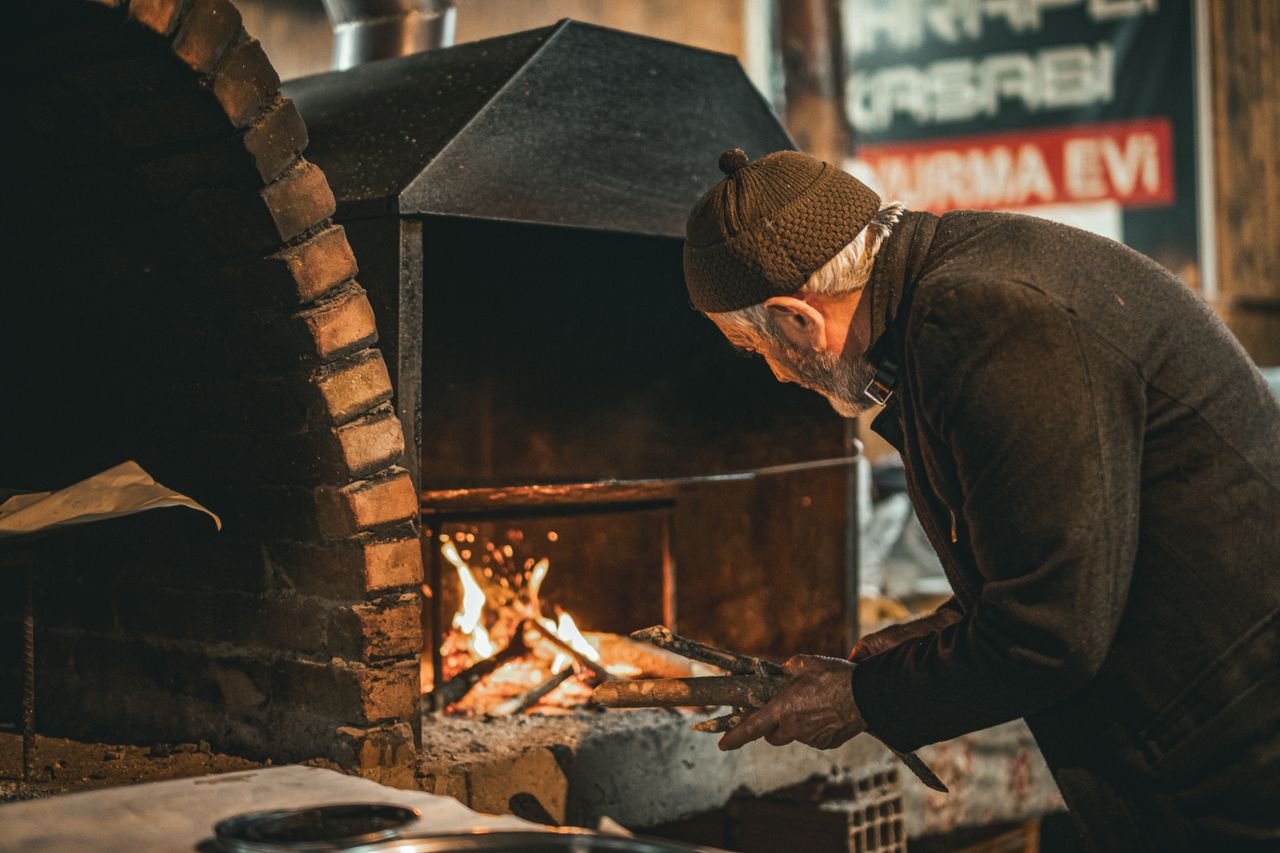
The oven sits in a stone shed between two houses and belongs to all of them, which means it belongs to a committee, which means there are rules. The fire is lit at four in the morning by whoever's turn it is. Bread goes in by height of loaf — tall first, flat last — and the final heat is for tarts, because nobody wastes a dying oven.
I was given the job of carrying boards, which is the job given to anyone who cannot be trusted near dough. Eleven households, thirty-eight loaves, one tart of greengages so dark they looked lacquered.
Heat you cannot adjust
There is no dial. Marie-Jo reads the oven by throwing in a pinch of flour and watching how fast it browns, then by holding her forearm at the mouth and counting. Six seconds is bread. Three seconds is wait.
A wood oven is not an appliance. It is weather you built yourself.
The loaves came out with blistered bases and that sour, grassy smell that commercial bread has decided to live without. Mine burned on one side. It was the best bread I have eaten this year.